

On 12 November 2026, a large number of Microsoft's servers became "unexpectedly unavailable". Within hours, Outlook, Teams and Copilot were failing for organisations in 74 countries. GP surgeries, pharmacies, schools and police forces across the UK were affected, and Microsoft's first fixes didn't work. Microsoft says there is no indication of a cyber attack. One central fault reached millions of users at once. If your doors and cameras depend on a network or a central system outside your own building, whether that's the internet, a supplier's cloud or a national network, the same thing can happen to them.
The core argument
Every connection to a wider network is a route in, and every central system is a single point of failure. A security system linked to the internet can be attacked by anyone in the world, at any hour. A system that depends on a shared national network, a central server or a supplier's update can be stopped by one fault far from your site.
For years the attack risk was limited by the human effort it took to find and exploit a flaw. AI is removing that limit. Researchers have shown AI agents finding bugs that conventional testing missed, and exploiting known flaws in minutes. Meanwhile, as systems are centralised, one fault reaches more sites at once.
The safest design for physical security is still the simplest: an independent, closed, on-premise system that doesn't rely on anyone else's network to keep your doors working.
When cloud security systems were breached
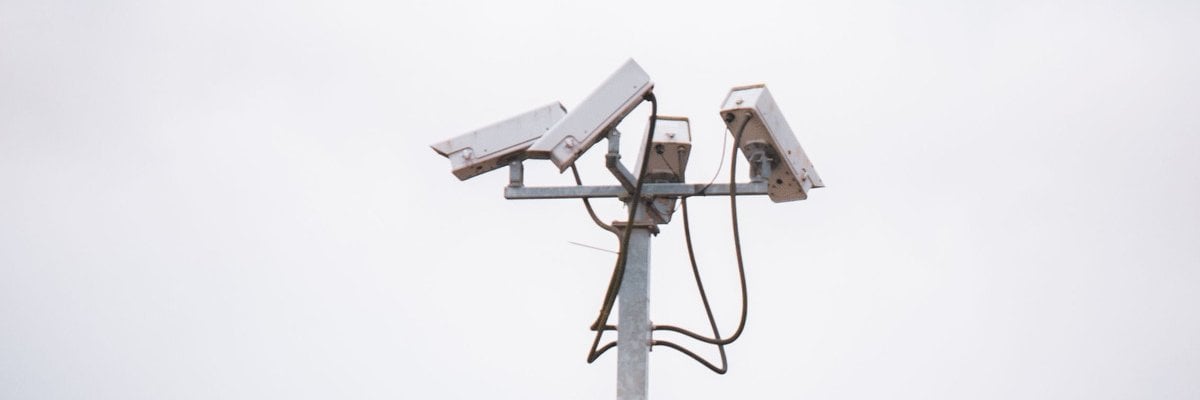
Verkada, March 2021. Attackers found one of the camera maker's support servers exposed online, holding super-admin credentials. With them they viewed live and archived footage from 97 customers, including hospitals, jails, Cloudflare and a Tesla supplier site, and badge data was accessed at 8 organisations. One weak point in a central cloud gave access to every customer at once.
TeslaMate, 2022 and 2025. Car owners ran their own TeslaMate dashboards online with no login. A researcher used the leaked keys to unlock cars, sound the horn and track their location. In 2025 another researcher found more than 1,300 dashboards still exposed.
When doors and cameras were turned against their owners
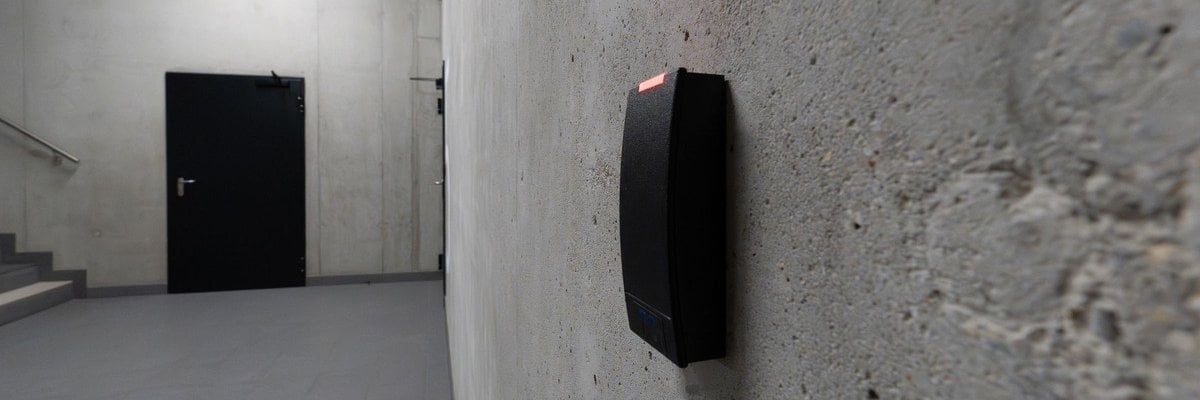
Linear eMerge E3. A flaw rated 10 out of 10 gave anyone full control of these door controllers without logging in. From 2020 attackers were exploiting it, pulling more than 2,300 controllers exposed online into a botnet, and it stayed unpatched for about five years. The vendor's advice was to keep the devices off the internet.
Mirai, 2016. Cameras and video recorders with built-in default passwords were hijacked into a botnet that took major websites offline.
Washington DC police, January 2017. Ransomware hit 123 of 187 police camera recorders days before the presidential inauguration.
Hikvision, 2021. A flaw let attackers take over cameras without logging in. A year after the fix, more than 80,000 cameras were still unpatched online, and the flaw has been linked to state hacking groups.
PHP2Shell: what AI-found flaws look like
PHP runs about three-quarters of websites, and many products with a web interface. On 21 October 2026, PHP fixed two critical flaws in the language itself, both rated 9.2 out of 10. They let an attacker run code on a server without logging in, before the application's own login can block them, and they affect every version back to PHP 5.4. Researchers confirmed takeovers of WordPress, Drupal, phpMyAdmin and other common software.

Both teams that found the flaws used AI. Security firm Wiz said frontier models made it practical to "develop and adapt working exploits across multiple applications in hours." The firm Calif found the same flaws separately with an OpenAI model.
AWS saw exploit attempts from 17 October, four days before the fix. The UK's National Cyber Security Centre (NCSC) said that "where immediate remediation is not feasible, organisations should consider taking the system offline." Finland temporarily shut its government's public web services, and parts of Wikipedia went down as a precaution. The NCSC also warned about "appliances and services that may bundle PHP", which describes many web-managed security devices.
So far no CCTV or access control system has been documented as hacked with AI. PHP2Shell shows how quickly that could change.
Central systems fail centrally
The risk isn't only attackers. When many sites depend on one system or one national network, a single fault stops all of them.

- Microsoft 365, November 2026. Servers becoming unexpectedly unavailable overloaded the rest, and services were disrupted for more than 12 hours across 74 countries. Microsoft says there is no sign of a cyber attack.
- UK air traffic control, August 2023. One unusual flight plan set off a hidden flaw in the national flight planning system. The backup failed the same way because it ran the same software, and about 1,500 flights were cancelled.
- UK air traffic control, December 2014. A system change went live the day before both of the Swanwick centre's main and backup servers shut down, affecting up to 1,900 flights.
- Sainsbury's, March 2024. Sainsbury's blamed an overnight software update for card payments failing in many stores and most online deliveries being cancelled.
- CrowdStrike, July 2024. One faulty routine update crashed about 8.5 million Windows devices worldwide.
- Visa Europe, June 2018. One switch failing in one data centre meant 5.2 million transactions failed.
None of these needed a hacker. A door that depends on a remote server, a shared national network or an update pushed centrally has the same weakness.
Locks exist to keep people out and keep working when everything else fails.
The case for independent systems
An independent, on-premise access control system has no outside route for an attacker to try and no central fault to inherit. It keeps working when a cloud provider, a national network or a connection goes down, and it changes only when you decide to update it, after testing, rather than when a supplier pushes a change overnight. Your cardholder data and footage stay on your own premises.
Independent doesn't mean neglected. Patch on your own schedule, change default passwords, separate the security network from office IT and wider networks, and give remote access only through tightly controlled routes.
Close
Locks exist to keep people out and keep working when everything else fails. Tie them to someone else's network and one fault, or one attacker, can reach every door at once. Keep your security systems independent and on networks you control.
Sensor Access Technology, Sussex Innovation Centre, Science Park Square, Falmer, BN1 9SB. 01273 242355.
About Sensor Access Technology
Sensor Access is a global supplier of access control and has worked with UK installers since 1999. Call the Sensor Access team on 01273 242355 or contact us online.
You can also visit us at the Sussex Innovation Centre, Science Park Square, Falmer, BN1 9SB.
Sources
- Microsoft 365 outage: BBC, The Guardian, IT Pro
- Verkada: Verkada incident report, Reuters
- TeslaMate: TechCrunch 2022, TechCrunch 2025
- Linear eMerge E3: CISA, SecurityWeek
- Mirai: Krebs on Security
- Washington DC police: US Secret Service
- Hikvision: CISA, SecurityWeek
- AI finding and exploiting flaws: Google Project Zero, arXiv paper
- PHP2Shell: BBC, Wiz, Calif, Datadog, php.net
- Air traffic control: CAA 2023 review, CAA 2014 enquiry report
- Sainsbury's: BBC
- CrowdStrike: CrowdStrike root cause report
- Visa: The Guardian